


Your Ultimate Guide to Fat Quarter Size and Creative Uses
If you've spent any time in a fabric shop, you've probably heard the term "fat quarter." So, what exactly is it? A standard fat quarter size is a piece of fabric that measures about 18 inches by 22 inches. It's a hugely popular pre-cut size, especially among quilters, because its squarish shape is far more versatile than a traditional quarter-yard cut.
What Is a Fat Quarter
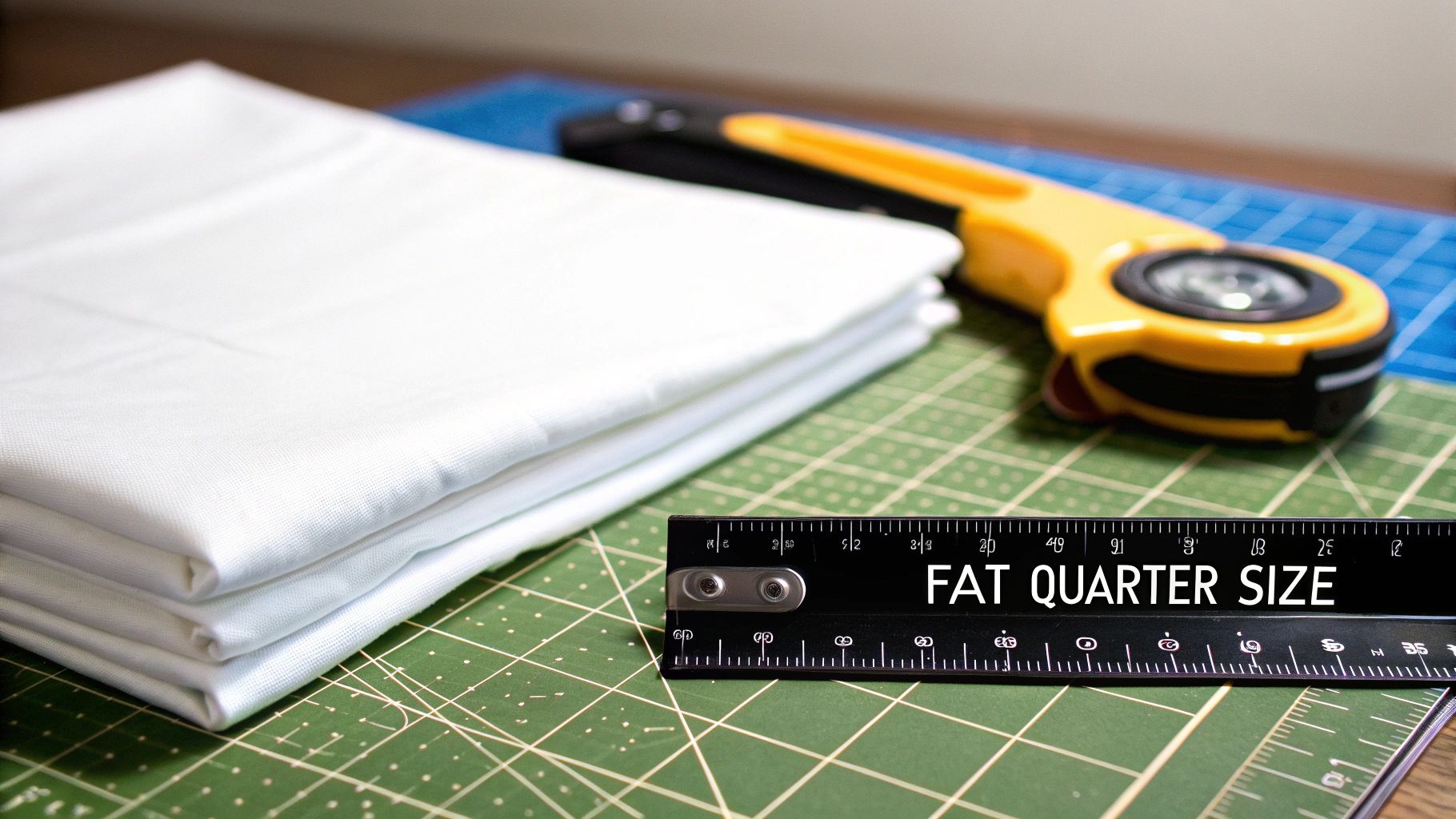
To really get it, picture a yard of fabric. A yard is 36 inches long, and the width can vary, but it's often around 44 inches. If you walked into a store and asked for a quarter yard, they would cut a 9-inch strip from the full width of the fabric. You'd end up with a long, skinny piece measuring 9 inches by 44 inches. That’s great for things like borders, but not so much for cutting out blocky quilt pieces.
The Pizza Analogy
I love using a pizza analogy to explain this. Think of that yard of fabric as a big, rectangular pizza. A traditional quarter yard is like cutting one long, skinny slice across the entire thing. You get the same amount of "pizza," but the shape isn't very useful.
A fat quarter, on the other hand, is like getting a proper square slice. It's created by first cutting the yard in half lengthwise (at 18 inches) and then cutting that half in half widthwise. This clever cut gives you a much more usable, "fatter" piece of fabric.
This simple change in how the fabric is cut is a total game-changer. It gives you a piece with more usable width, perfect for cutting larger squares, circles, or intricate pattern pieces without a ton of wasted fabric.
Fat Quarter vs Standard Quarter Yard at a Glance
To make it crystal clear, let's put the two cuts side-by-side. The key difference lies in the shape, which directly impacts what you can make.
| Attribute | Fat Quarter | Standard Quarter Yard |
|---|---|---|
| Typical Dimensions | 18" x 22" | 9" x 44" |
| Shape | Squarish Rectangle | Long, Thin Strip |
| Best For | Quilt blocks, pouches, appliqués | Borders, sashing, straps |
As you can see, the fat quarter's dimensions open up a world of possibilities that a standard quarter yard just can't accommodate.
Why This Shape Is So Useful
The fat quarter isn't just a gimmick; it was born out of practicality. Quilt shops started offering them as a way to give customers a more useful cut for creating quilt blocks. You get the same surface area as a quarter yard—roughly 396 square inches—but in a shape that lets your creativity run wild.
This versatile format is perfect for all sorts of projects:
- Quilting: You can easily get a 10-inch square or a bunch of 5-inch charm squares from a single fat quarter.
- Cosplay & Costumes: Need to make detailed appliqués, small accessories, or gauntlets? A fat quarter saves you from buying a whole yard.
- Small Projects: It’s the ideal size for sewing zippered pouches, tote bags, and little home decor items like placemats.
Most fat quarters are made from cotton, which is a fantastic and versatile material. If you're curious about the different weaves and weights, exploring a guide on the variety of cotton fabric can be really helpful. In the end, the fat quarter's clever design is why it has become a true staple in every quilter's and crafter's stash.
Why Fat Quarters Reign Supreme in the Crafting World
The fat quarter isn't just another piece of fabric; it's a genuine powerhouse in the crafting community. This particular pre-cut has taken the sewing world by storm, fueling sales and, more importantly, making it easier than ever for new people to pick up the craft.
Let's face it, walking up to a cutting counter and asking for yards of fabric can be intimidating and expensive, especially when you're just starting out. Fat quarters are the perfect solution. They give you a small, affordable sample of a fabric line, letting you build a beautiful stash of different patterns and colors without breaking the bank. It makes that first step into a new project feel so much more approachable.
But it’s not just a beginner's game. Seasoned quilters and cosplayers know that time is precious. For them, fat quarters are all about efficiency. They offer just the right amount of fabric for quilt blocks or detailed costume pieces, which means less time spent measuring and a lot less wasted fabric.
The Real Money Behind Pre-Cuts
The commercial impact of this simple idea is massive. Entire online businesses have been built around this one product, which says a lot about its appeal and financial muscle. In fact, fat quarters are a major player in the $4.5 billion U.S. quilting market that's projected for 2025.
You only have to look at online giants like Fat Quarter Shop to see this in action. In August 2025 alone, the site pulled in a staggering $10.39 million in revenue from over 42,000 transactions. That's a whole lot of pre-cuts. Discover more insights into the quilting retail market.
This isn't just a trend; the numbers show that the fat quarter is a foundational part of the modern fabric industry. Its design hits that sweet spot of giving customers what they truly want: variety, affordability, and a smarter way to work.
A True Game-Changer for Quilters and Cosplayers
When you dive into specific crafts, you can really see how the fat quarter’s unique size solves some very real problems. It's become an essential tool for both quilters and costume makers, helping them overcome common hurdles.
Here’s a closer look at how it makes a difference:
- For Quilters: Big, beautiful quilts often call for dozens of different fabrics. Fat quarter bundles are a quilter's dream, offering a perfectly coordinated set of colors and patterns. This saves hours of agonizing over fabric choices and guarantees your final design looks cohesive, especially for those wonderfully scrappy quilt patterns.
- For Cosplayers: Bringing a character to life is all in the details—the small gauntlets, intricate appliqués, or decorative panels. It feels incredibly wasteful to buy a whole yard of fabric just for a tiny splash of color. A fat quarter gives you plenty of material for those accessories without the extra cost or a pile of scraps you'll never use.
In the end, the fat quarter’s popularity is no accident. It’s a smart product that was practically designed to solve the everyday challenges of a passionate and growing community. It saves time, cuts down on waste, and opens the door to creativity for everyone.
Mastering Fabric Math With Conversion Charts
Let's be honest, fabric math can feel a little intimidating. But when you get the hang of it, converting standard yardage into fat quarters is one of the most useful skills you can have. It’s the secret to buying exactly what you need, which saves money and keeps your scrap bin from overflowing.
The most important thing to remember is this: one yard of standard quilting cotton (usually 42 to 44 inches wide) gives you exactly four fat quarters. That simple equation is the bedrock of all your project planning. Once you’ve got that down, the rest is just simple multiplication.
It's a huge and vibrant industry, as you can see from the numbers. Smart fabric purchasing isn't just for hobbyists; it's a critical skill for the thousands of small businesses that make up the crafting world.
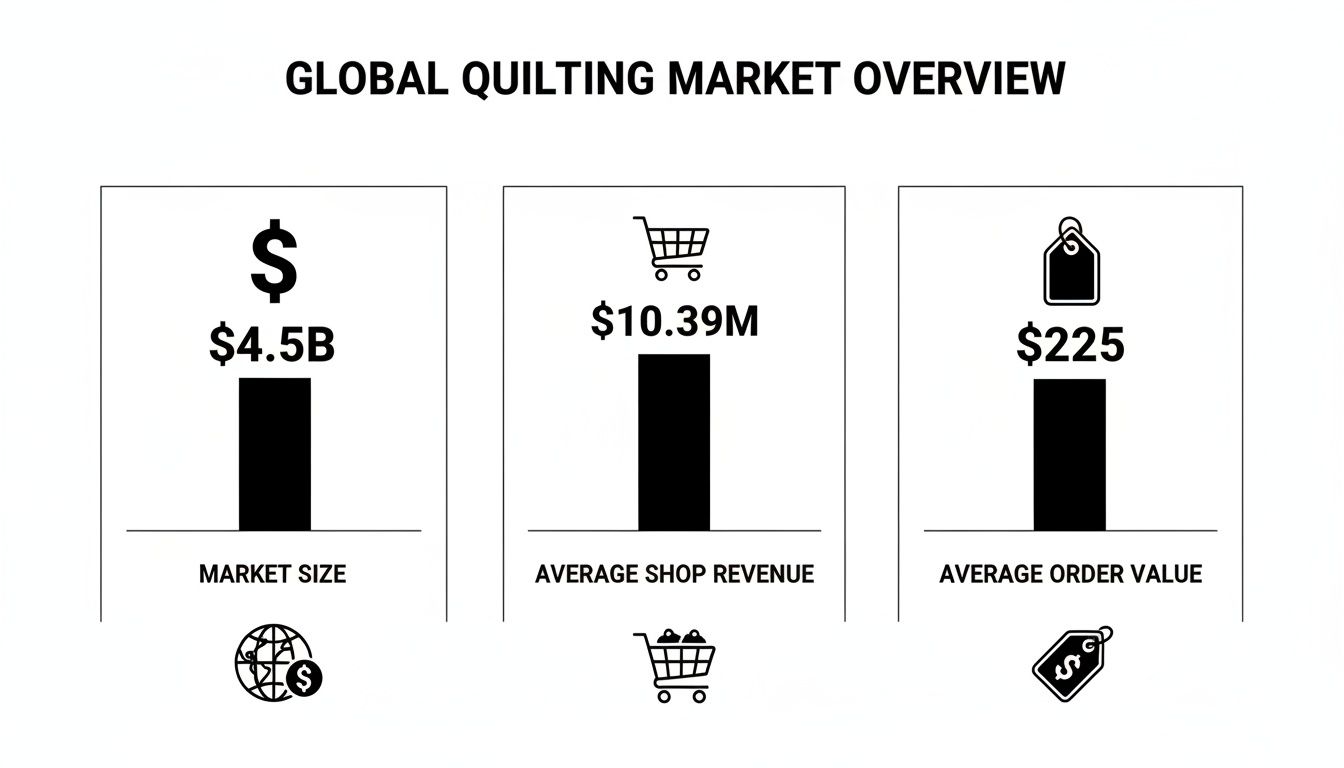
These figures really drive home just how much we all love this craft and why getting the most out of our fabric matters so much.
Yardage to Fat Quarter Conversion Guide
To help take the guesswork out of your next fabric run, I’ve put together a handy little reference table. Whether your pattern calls for yards or you're just adding to your stash, this chart makes it super easy to see how much you need.
| Fabric Yardage | Number of Fat Quarters |
|---|---|
| ¼ Yard | 1 Fat Quarter |
| ½ Yard | 2 Fat Quarters |
| ¾ Yard | 3 Fat Quarters |
| 1 Yard | 4 Fat Quarters |
| 1 ½ Yards | 6 Fat Quarters |
| 2 Yards | 8 Fat Quarters |
| 3 Yards | 12 Fat Quarters |
This little chart is your starting point for tackling any project with confidence. Now you know that if a pattern calls for two yards, you can grab eight different fat quarters and get the same amount of fabric, but with way more creative potential.
Calculating Yield From a Single Fat Quarter
Here’s where the real magic happens. The fat quarter size is a quilter's best friend because of its incredible yield for smaller pieces. Instead of being stuck with a long, narrow strip, its generous dimensions let you cut a whole variety of shapes with very little waste.
The most common cut you'll get from a fat quarter is the 5-inch square, which many of us know as a "charm square." After squaring up a standard 18" x 21" fat quarter, you can reliably get twelve 5-inch squares.
That kind of efficiency is a total game-changer for patchwork. But that's not all! Here’s what else you can get from just one of these little powerhouses:
- For 2.5-inch squares: You can cut at least fifty-six 2.5-inch squares, which is fantastic for those super detailed, scrappy projects.
- For larger blocks: You can easily get a full 10-inch square (what we call a "layer cake" square) with plenty of fabric left over for smaller coordinating pieces.
Once you master this basic fabric math, you stop being just a fabric buyer and become a strategic project planner. You can walk into any shop—or browse our collection here at Famcut—and know exactly what you need to bring your creative vision to life, without a bit of stress.
What Can You Make With All Those Fat Quarters?
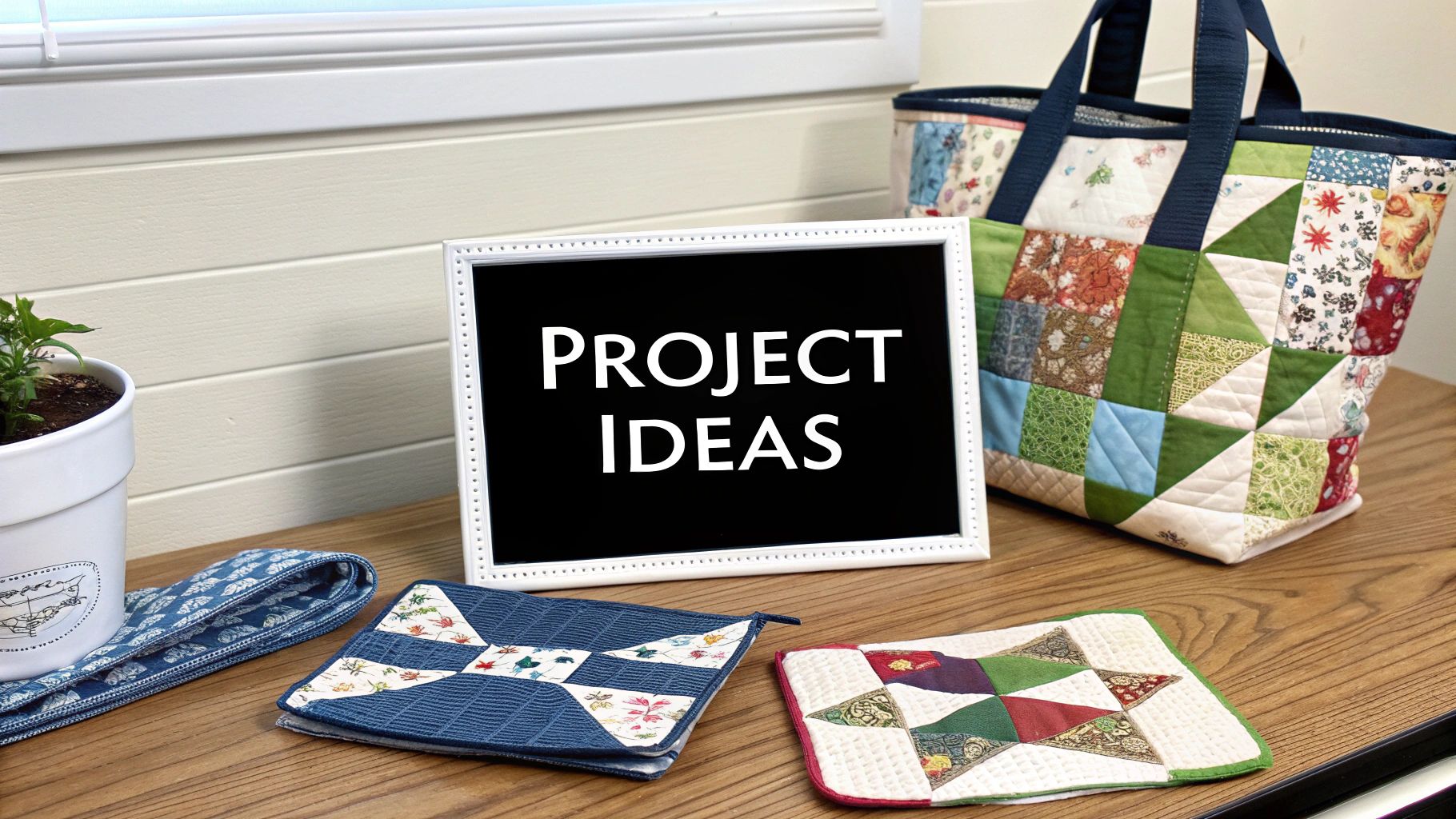
Alright, you've started collecting those beautiful little bundles of fabric. Now for the fun part—deciding what amazing things to make with them. The true magic of the fat quarter size is just how much you can do with it. It’s the perfect starting point for almost any project, whether you’ve got a few free minutes or a whole weekend to create.
These precuts aren't just a convenient size; they’re a reflection of a major shift in the $4.5 billion quilting fabric sector. The industry has embraced waste-minimizing formats like these because they give creators exactly what they need for a huge variety of projects, without having to buy a full yard every time. Explore more about the growing quilt market here. It’s a smart approach that lets you bring more of your ideas to life.
More Than Just Quilt Blocks
While fat quarters are practically a quilter’s best friend, their usefulness goes way beyond traditional patchwork. That generous 18" x 22" shape is perfect for a whole world of sewing projects that need a bit more fabric than a long, skinny strip can provide.
Let’s get your creative gears turning. Here are just a few ideas that show how much you can accomplish with a single fat quarter or a small bundle:
- Stylish Tote Bags: Grab two coordinating fat quarters for the outer panels of a chic, durable tote. It's a fantastic way to mix and match patterns for a look that’s totally you.
- Patchwork Apparel: Give a denim jacket a new lease on life with some fun patchwork elbow patches, or create a statement yoke for a plain shirt.
- Fabric Storage Baskets: Tidy up your sewing room (or any room!) with custom fabric bins. A single fat quarter is often enough for a small- or medium-sized basket.
- Unique Home Decor: Think custom placemats for your dining table, a set of new decorative pillow covers, or a festive fabric bunting for birthdays and holidays.
A Secret Weapon for Cosplayers
For anyone in the cosplay community, fat quarters are an absolute game-changer for adding those professional-looking details to a costume. Ever needed a specific color or pattern for just one small part of a character's outfit? Buying a whole yard feels like such a waste. The fat quarter size is the perfect solution.
Fat quarters aren't just for quilting; they are the ultimate crafting shortcut. They provide enough fabric to make an impact but not so much that you're left with overwhelming scraps, making them perfect for detailed and varied projects.
This makes them incredibly useful for intricate costume elements where every detail matters.
Ideas for Your Next Cosplay:
- Intricate Appliqués: Easily cut out detailed shapes, symbols, and logos to stitch onto garments, capes, or banners.
- Detailed Accessories: Crafting smaller items like gauntlets, headpieces, pouches, or armbands is a breeze with a fat quarter.
- Patchwork Elements: Recreating characters with scrappy or patched clothing is simple when you can pull from the variety in a fat quarter bundle.
Whether you're sewing a simple zippered pouch or assembling an award-winning costume, these versatile cuts prove you don’t need a mountain of fabric to make something incredible. Your next masterpiece is probably sitting right there in that colorful pile of fat quarters.
How to Care For and Organize Your Fabric Collection
Once you start collecting fat quarters, it doesn’t take long to realize you’re building more than just a stash—you’re curating a creative library. To make sure these fabrics are ready to go when inspiration for a new quilt or cosplay piece strikes, a little care and organization can make all the difference.
To Pre-Wash or Not to Pre-Wash?
Ask a dozen quilters if they pre-wash their fat quarters, and you’ll likely get a dozen different answers. It’s one of the great debates in the sewing world! There's no single right way, but it really boils down to your project and personal preference.
Pre-washing is a smart move if you're mixing fabric types or using bold colors like deep reds and blues. Those highly saturated dyes can sometimes bleed in the first wash, and you don’t want that happening on your finished masterpiece.
On the other hand, many crafters love the crisp, stiff feel—often called "hand"—of unwashed fabric. It makes for exceptionally precise cutting. If you go this route, just know that your finished quilt will get that classic, slightly crinkled, vintage look after its first wash, which many people adore.
Getting Your Fabric Project-Ready
A little prep work before you start cutting is non-negotiable for getting professional-looking results. If you did wash your fat quarters, they probably came out of the dryer looking a bit like a tangled, wrinkled mess.
Giving them a quick press with a hot iron is the key. Use plenty of steam to work out any stubborn creases until the fabric is completely smooth and flat. This step is your secret weapon for accurate cuts and seams that line up perfectly.
Pro Tip: To keep fraying under control in the wash, try trimming the raw edges with pinking shears. Another quick trick is to snip a tiny diagonal cut off each corner. It’s a simple step that saves you from a world of untangling later.
Smart and Stylish Storage Solutions
Let’s be honest: a tidy fabric stash is an inspiring one. It’s hard to feel creative when you’re digging through a jumbled mess. When you can easily see all your beautiful prints, you’re far more likely to dive in and start a project.
Here are a few tried-and-true methods for keeping your fat quarters in line:
- The File Fold: This is my personal favorite. Fold your fat quarters into tidy, uniform rectangles and "file" them vertically in a drawer or bin. It’s like a rainbow-colored card catalog where you can see every single fabric at a glance.
- Mini-Bolts: Keep your fabric perfectly smooth by wrapping fat quarters around comic book boards or specially made mini-bolt cards. You can then stack them on a shelf just like books in a library.
- Hanger Method: Use those hangers designed for multiple pairs of pants to drape several fat quarters. This is a fantastic option if you’re short on shelf space, as it keeps fabrics visible and crease-free in a closet.
The best system is the one that works for your space and your brain. The goal is to set yourself up for success so you can grab what you need and let your creativity flow, making every session at Famcut a joy.
Got Questions About Fat Quarters? We've Got Answers
Once you start building that beautiful stash of fat quarters, you’ll naturally run into a few questions. It’s totally normal. Getting the hang of the lingo and knowing the best ways to use them is part of the fun, and a few good answers will have you sewing with confidence in no time.
Let's clear up some of the most common head-scratchers so you can get back to what matters most—bringing your creative ideas to life.
Should I Pre-Wash My Fat Quarters Before Sewing?
Ah, the great debate in the sewing world! Honestly, there’s no single right answer here—it really comes down to personal preference and your specific project.
Pre-washing is a smart move if you're working with bold, saturated colors like deep reds or navy blues that might bleed. It’s also wise if you're making something that will see the inside of a washing machine often, like a baby quilt. Washing first takes care of any potential shrinking or color running down the road.
On the other hand, many quilters skip the wash. Why? Because unwashed fabric has a certain crispness to it, a bit of sizing left from the factory that makes it a dream to cut with precision. Forgoing the pre-wash also helps achieve that classic, crinkly, vintage texture that appears after the finished quilt is laundered for the first time.
My rule of thumb: If you’re mixing fabrics from different lines or are worried about colors bleeding, toss them in for a wash. If you prioritize super-accurate cuts and love that cozy, puckered quilt look, feel free to skip it.
How Many 5-Inch Squares Can I Cut From One Fat Quarter?
This is where you really see the genius of the fat quarter's shape. Those generous dimensions are designed to give you the most bang for your buck, which every quilter can appreciate.
From a single 18" x 21" fat quarter, you can easily get twelve 5-inch squares. Just trim off the selvage and you can lay them out in a simple 3x4 grid. This fantastic yield is precisely why so many quilters reach for fat quarters when a pattern calls for charm packs.
Are Fat Quarters Just for Quilting?
Not a chance! While they may have gotten their start in the quilting community, fat quarters have become a go-to for all sorts of creative projects. That nearly-square shape is just so much more practical than a long, skinny quarter-yard strip.
Think outside the quilt block:
- Fun Accessories: They're perfect for zippered pouches, tote bag panels, and cute headbands.
- Home Decor: Whip up some custom placemats, coasters, or festive bunting for a party.
- Apparel & Cosplay: Ideal for making doll clothes, unique face masks, or adding detailed appliqué to a costume.
Fat quarters are a wonderfully affordable way to build a diverse fabric library without having to buy a full yard of every print you fall in love with.
What’s a Fat Eighth?
It's pretty much what it sounds like—a fat eighth is just a fat quarter cut in half! A standard eighth of a yard is a long, almost useless strip measuring 4.5" x 44". A fat eighth, however, is a much friendlier rectangle.
Typically, it measures about 9" x 21". This smaller piece is fantastic for appliqué, tiny patchwork projects, or those times when you just need a little splash of a certain color to complete your design.
Here at Famcut, we know that the right fabric can spark incredible creativity. Dive into our hand-picked fat quarter bundles and find the perfect prints for your next masterpiece, whether you're a veteran quilter or an imaginative cosplayer.